So, I was sitting on my couch the other day, going through the motions of applying for a personal loan on my phone. You probably know the drill by now.
I uploaded a slightly glaring picture of my driver’s license, took one of those awkward up-close selfies, securely linked my checking account, and hit the big “Submit” button.
I barely had time to set my phone down. Exactly eight seconds later, the screen refreshed with a bright green badge: “Approved.”
Wait a minute. What just happened?
Let that sink in for a second. Thousands of people are applying on this exact same app every single day. There is absolutely zero chance that a human loan officer opened my digital file, read my IDs, verified I wasn’t a scammer, ran the math on my financial history, and made a responsible lending decision in the time it takes to tie a shoelace.
So, I decided to do some serious digging into the backend architecture of modern fintech apps. I wanted to understand the exact mechanics behind that single tap. If you have ever wondered what happens when you apply for a loan online, or how these companies don’t just lose all their money to fraudsters, you definitely aren’t alone.
Here is the step-by-step, behind-the-scenes breakdown of the wild technology, machine learning models, and API orchestration that happened in those magical eight seconds.
The Second-by-Second Anatomy of an Instant Loan Decision
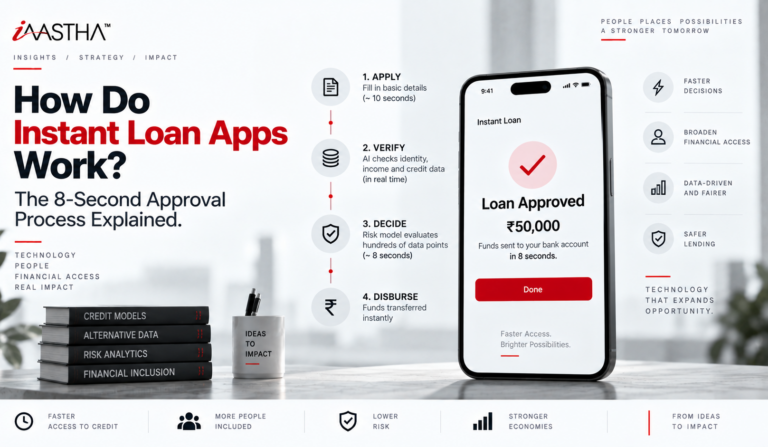
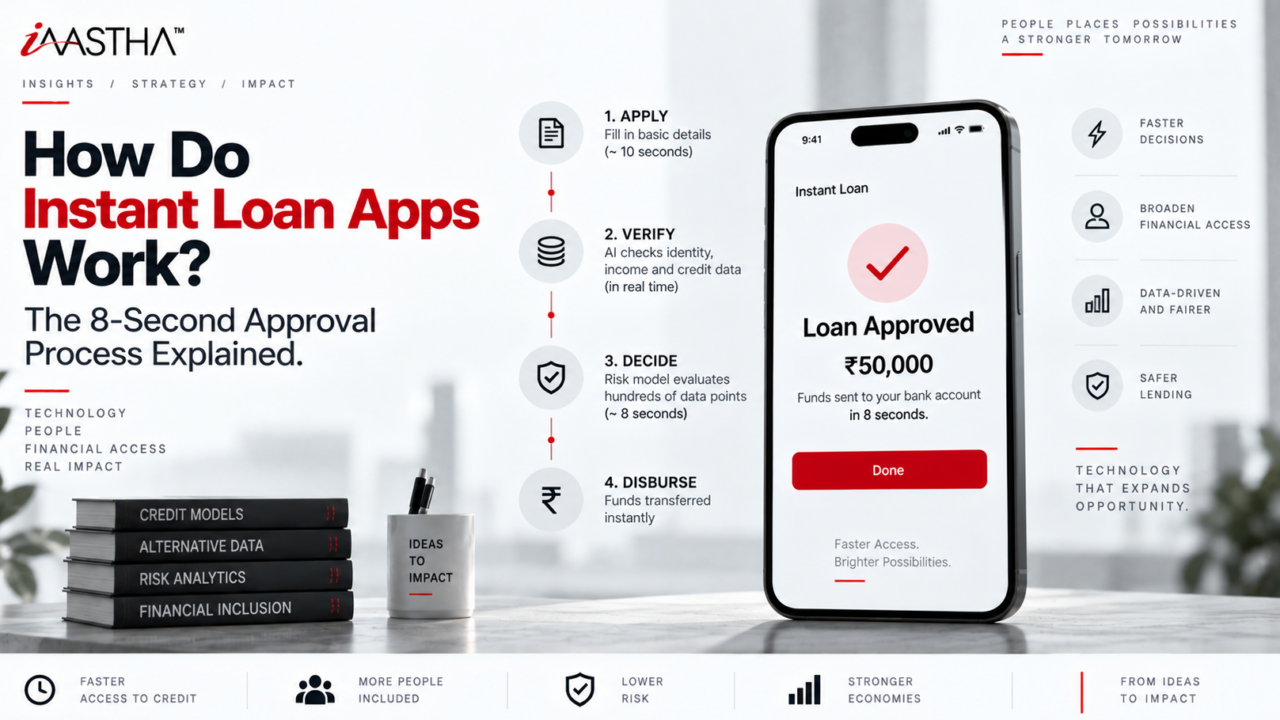
The whole instant loan approval process is essentially a masterclass in automated workflow orchestration. It takes what used to be days of painful manual underwriting and turns it into a high-speed, synchronised dance of specialized software.
Here is exactly how instant loan apps work, broken down second by second.
📸 Second 0: Reading the Documents (OCR) The millisecond my driver’s license finished uploading, Optical Character Recognition (OCR) kicked off. Behind the scenes, systems powered by heavy hitters like AWS Textract, Onfido, or Jumio read the image. They instantly scraped my name, date of birth, and license number. If I had uploaded a passport instead, the system would have scanned the Machine Readable Zone (MRZ)—that weird block of text and chevrons at the bottom—to run a checksum math problem. This instantly catches algorithmic tampering or photoshopped documents.
🤳 Second 1: Making Sure I’m Real (Liveness Detection) Next came the awkward selfie. But this wasn’t just the app taking my picture; it was an active, highly secure checkpoint. Advanced liveness detection algorithms analyzed the tiny micro-movements in my face and the lighting of the room. This ensures I am a real, breathing human being. It stops scammers from holding up a printed photo, wearing a scary 3D silicone mask, or holding an iPad up to the camera playing a video. Once the system knew I was alive, biometric AI mapped the geometry of my face and cross-referenced it with the photo from my ID. Match confirmed.
🔍 Second 2: The Global Background Check By the second second, a background system took the name it pulled from my ID and ran it against global watchlists. Fintech lenders are legally bound by strict Anti-Money Laundering (AML) laws. My name was bounced against international sanctions lists and databases of Politically Exposed Persons (PEPs) using enterprise services like OFAC or ComplyAdvantage.
The cool part? This requires complex “fuzzy matching.” Because names are messy. A single name might have dozens of phonetic spellings worldwide. The system has to figure out if “Jon Dough” is the same guy as the banned “John Doe.”
🏦 Second 3: Open Banking APIs Step In Remember when I linked my bank account? At this exact second, open banking APIs for lending—like Plaid, Finicity, or TrueLayer—pulled a read-only feed of my recent transactions. Thankfully, the dark ages of faxing easily forged PDF bank statements are over. Within milliseconds, specialized machine learning models parsed my raw banking data. They calculated my income stability, checked how often I overdraft, and figured out my real-time debt-to-income (DTI) ratio.
📊 Second 4: The Classic Credit Bureau Pull Simultaneously, the app reached out to the traditional credit bureaus. Through lightning-fast API calls to Experian, Equifax, or TransUnion, the system grabbed my official credit score and historical repayment data. Because this data is universally standardized across the finance industry, fetching it literally takes a fraction of a second.
The Invisible Fraud Checks You Completely Missed
While all that highly visible data pulling was happening, there was a secret war going on in the background.
🕵️ Second 5: Passive Fraud Detection While the app was crunching my credit and banking numbers, it was also running a battery of silent fraud checks. I never saw them, but they are a massive part of how liveness detection prevents identity fraud and how lenders keep their default rates low.
These silent background systems are asking questions like:
- Device Fingerprinting: Is this a normal iPhone? Or is it a known burner phone, or maybe an emulator software running on a scammer’s desktop in another country?
- IP Location Matching: Does the IP address of this phone geographically match the home address they typed into the application?
- Email Age and History: Was the email address they provided created a decade ago, or ten minutes ago just for this application?
- Velocity Checks: This is a big one. The system looks at the network and asks, “Has this exact phone applied for a loan 15 times today using 15 different names?” If yes, it’s an instant, hard rejection.
Machine Learning vs. Human Underwriters: Making the Final Call
⚙️ Second 6: The AI Decision Engine Okay, so by second six, all my data is gathered, normalized, and verified. Now, it all gets shoved into the core decision engine. This is where machine learning in fintech loan decisions really shows off.
First, the system runs through Hard Rules. These are non-negotiable. If I am under 18, if my name pinged on a terrorist watchlist, or if my income is straight-up below their minimum threshold, the algorithm automatically kicks me out.
If I survive the hard rules, my profile is fed into a heavy-duty machine learning model (usually an XGBoost-style gradient boosting algorithm). This model compares my profile against millions of data points from previous borrowers to score my statistical likelihood of defaulting on the loan.
But here is where it gets interesting regarding E-E-A-T and consumer trust. Because of strict financial laws like the Equal Credit Opportunity Act (ECOA), the AI is not allowed to be a mysterious “black box.” If it rejects you, it has to legally explain why. Every single decline must generate specific reason codes (like “debt-to-income ratio too high” or “insufficient credit history”). In lending, AI explainability matters just as much as AI accuracy.
✅ Second 8: The Final Output The decision engine finishes its math, spits out a result, and my screen updates: Approved.
But what about the folks who don’t get a clean yes or no? If an applicant’s risk score is riding the borderline, their file gets automatically routed to a human review queue. But these human underwriters aren’t staring at stacks of messy paperwork. They look at a clean, pre-parsed dashboard of data, letting them make a final judgment call in minutes. Honestly, though, this manual review process makes up a tiny fraction of modern loan applications.
The Real Secret Sauce: API Orchestration
When you step back and look at this whole process, you realize something cool. The real magic of fintech isn’t just one giant, sentient AI doing all the heavy lifting.
The actual secret sauce is orchestration.
It’s a beautifully choreographed symphony of 6 to 8 entirely different third-party APIs (Plaid, Onfido, Experian, AWS). They all talk to each other through robust event-streaming platforms and message queues—usually tech like Apache Kafka or Amazon SQS.
This specific architecture is what allows a fintech company to treat 10 applicants and 10,000 applicants the exact same way. Whether you apply on your lunch break on a Tuesday or at 3:00 AM on a Sunday, the system never sleeps, it never gets overwhelmed by a rush of customers, and it never loses your file under a coffee mug.
So, the next time you see an “Instant Approval” badge on a website, just remember: it isn’t magic. It is dozens of highly specialized global systems shaking hands, verifying your existence, and judging your financial character—all in less than 10 seconds.
Frequently Asked Questions (FAQs)
How long does it actually take to get an instant loan approved and funded?
While the backend data gathering and the algorithmic decision-making (the actual “approval”) usually happen in under 15 seconds, getting the cash is a different story. The actual disbursement of funds to your bank account can take anywhere from a few minutes to a full business day. It largely depends on whether your bank supports real-time payments (RTP) or uses standard ACH transfers.
Is linking my bank account for a loan application actually safe? Yes, if you are using a legitimate app, it is highly secure. Modern instant loan apps don’t actually scrape your bank login. They use Open Banking intermediaries like Plaid or TrueLayer, which utilize bank-level encryption. The lender never sees or stores your username or password; they only get a secure, temporary, read-only token to look at your transaction history.
Do instant loan apps check your credit score, and will it hurt it?
Yes, almost all reputable lenders will check your credit. However, most will do a “soft pull” first. This lets them pre-approve you and show you potential interest rates without hurting your credit score. If you like the offer and formally accept the loan terms, they will then do a “hard pull,” which will temporarily ding your score by a few points.
Why did my instant loan get rejected by the algorithm?
By law in many countries (like the US under the Fair Credit Reporting Act), lenders cannot just say “no” and walk away. If you are denied, they must send you an “Adverse Action Notice.” This document will outline the specific, legally sound reason codes for why the algorithm declined you. Common reasons include a lack of credit history, recent missed payments to other lenders, or having too much existing debt compared to your income.
How does machine learning actually determine if I get the loan?
Instead of just looking at a flat, three-digit FICO score, machine learning models analyze massive amounts of historical data to find hidden patterns. The AI looks at nuanced behaviors: how you manage your day-to-day cash flow, your debt-to-income ratio, and even how often you dip into your overdraft. It uses these complex patterns to predict how likely you are to pay back this specific new loan on time.