Artificial intelligence agents are moving from experimental demos into the operating layer of digital work. A single chatbot can answer a question, but artificial intelligence agents can plan, call tools, remember context, and complete multi-step tasks with limited supervision. The next leap is the agent cluster: a coordinated group of AI agents where each agent has a defined role, shared context, and a measurable outcome. Instead of asking one model to do everything, an AI agent cluster can divide research, analysis, decision support, quality checks, and execution across specialized workers.
This matters because businesses are no longer asking whether AI can draft text or summarize documents. They are asking how agentic AI workflows can reduce cycle time, improve consistency, and connect knowledge across sales, operations, customer support, software development, finance, and marketing. The most useful artificial intelligence agents are not magic replacements for teams. They are structured systems that combine automation, reasoning, data access, and human approval. When designed well, multi-agent systems can help organizations scale digital work without losing control of quality, compliance, or brand voice.
For readers, the practical question is simple: how can these systems help work move faster without creating confusion? The answer depends on design. Agent clusters need clear roles, dependable data, useful evaluation, and a publishing process that keeps people responsible for final outcomes.
What Are Artificial Intelligence Agents?

Artificial intelligence agents are software systems that use AI models to understand goals, make decisions, and take actions through connected tools. A normal AI assistant usually waits for a prompt and produces a response. An AI agent goes further: it can break a goal into steps, choose a tool, inspect the result, revise its plan, and continue until the task reaches a useful endpoint.
For example, a customer service agent might read a ticket, check order history, summarize the issue, draft a response, and escalate unusual cases. A research agent might scan documents, compare sources, extract insights, and prepare a briefing. A coding agent might inspect a repository, make a targeted change, run tests, and report what changed. These workflows depend on clear permissions, reliable tools, and well-defined boundaries.
The keyword is agency, but agency does not mean independence without oversight. Strong artificial intelligence agents operate inside rules. They know what they are allowed to access, when to ask for approval, and how to leave an audit trail. That discipline is what separates useful enterprise AI automation from risky experimentation.
Why AI Agent Clusters Matter Now
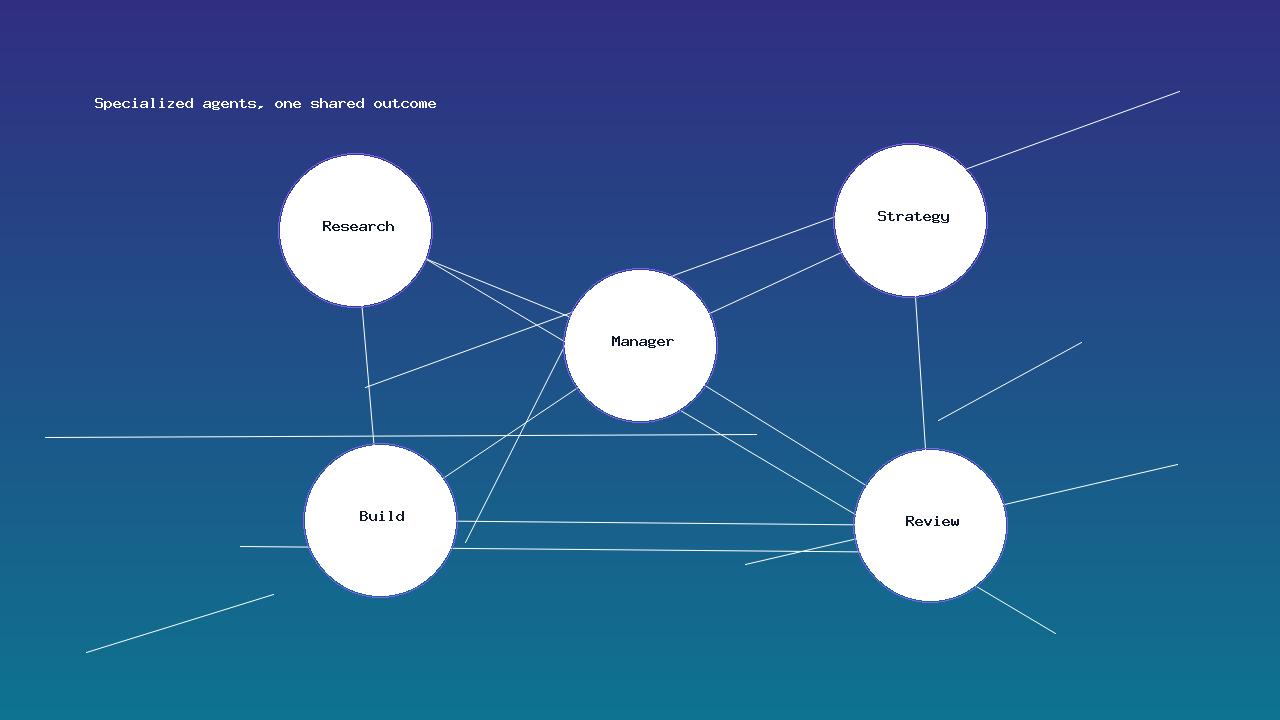
AI agent clusters matter because complex work is rarely a single-step task. Real workflows involve research, judgment, handoffs, exceptions, and verification. A single artificial intelligence agent can become overloaded when it must play every role at once. In a cluster, one agent can focus on research, another on strategy, another on execution, and another on review.
This structure reflects how human teams already work. A marketing team may have a strategist, writer, designer, SEO specialist, and editor. An agent cluster can mirror that pattern digitally. The result is not just faster output. It can also produce better checks and balances because each agent can evaluate a different part of the process.
The timing is also right because AI models now handle longer context, tool use, function calling, retrieval, and structured outputs far better than earlier systems. Cloud platforms, vector databases, workflow engines, and secure APIs make it easier to connect autonomous AI agents to business systems. Companies can now build agentic AI workflows that do more than generate content; they can monitor data, trigger actions, and support decisions across the organization.
How Clustered AI Workflows Operate

A clustered AI workflow begins with a shared goal. The system then assigns roles to different agents, gives each one the context it needs, and defines how the agents communicate. In a simple setup, a manager agent plans the task and delegates work. Specialist agents complete subtasks. A reviewer agent checks accuracy, policy alignment, and completeness before any final action is taken.
Good AI agent architecture usually includes four layers. The model layer handles reasoning and language. The tool layer connects agents to search, databases, documents, email, calendars, code repositories, or business applications. The memory layer stores useful context, preferences, and past decisions. The governance layer controls permissions, logging, approvals, and fallback paths.
This architecture helps prevent scattered automation. Without structure, artificial intelligence agents may duplicate effort, use inconsistent information, or make changes without proper review. With orchestration, each agent understands its job. One agent may retrieve the latest policy document, another may compare it with a customer request, and a third may produce the final recommendation. The workflow becomes repeatable, measurable, and easier to improve.
Practical Business Use Cases for Agent Clusters
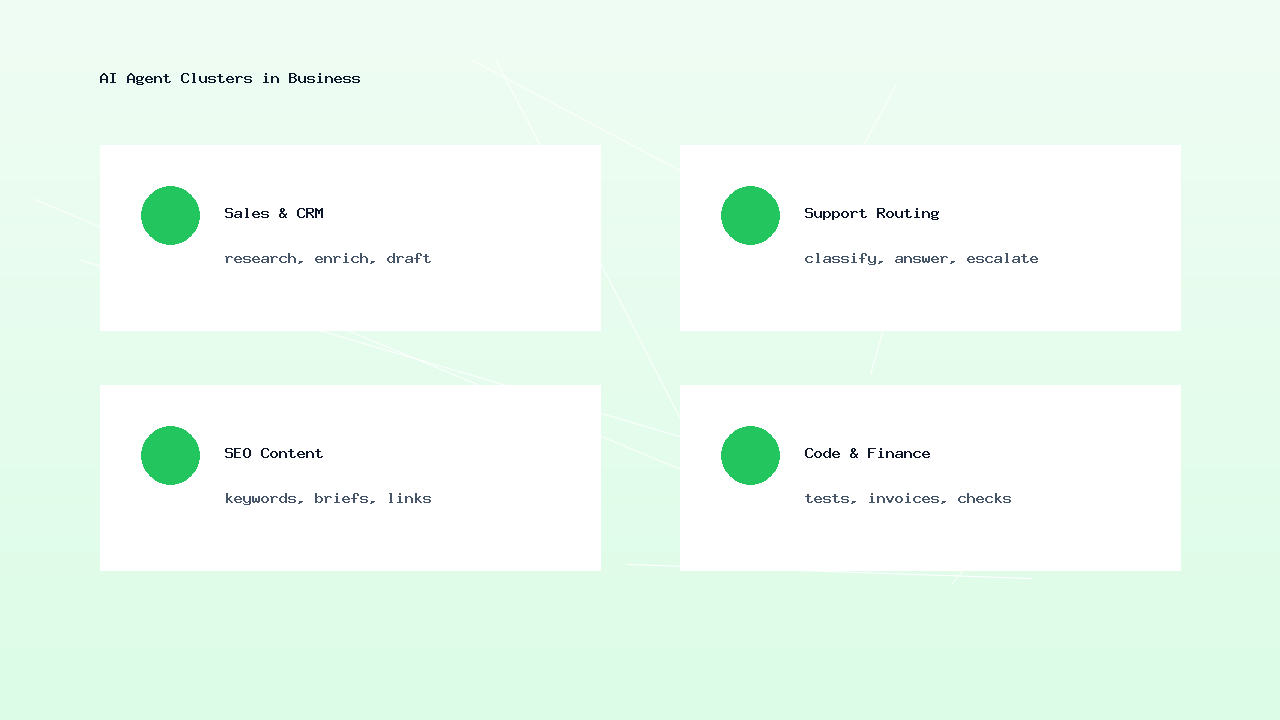
The strongest use cases for AI agent clusters are workflows that are repetitive, information-heavy, and dependent on multiple systems. In sales, agents can research prospects, enrich CRM records, draft outreach, and remind account managers when a lead is ready for human follow-up. In customer support, agents can classify tickets, suggest answers, detect sentiment, and route urgent cases.
In content and SEO, artificial intelligence agents can research keywords, cluster topics, create briefs, draft articles, check internal links, and optimize meta descriptions. In software development, a cluster can assign one agent to understand a bug, another to modify code, another to run tests, and another to summarize the pull request. In finance, agents can reconcile invoices, flag anomalies, and prepare review packets for human approval.
Healthcare, education, logistics, and legal operations can also benefit, but these sectors need stricter governance. The best approach is to start with low-risk support tasks before moving toward workflows that affect customers, money, or compliance. The goal is not to automate everything immediately. The goal is to identify where multi-agent systems can remove friction while preserving accountability.
Risks, Governance and Human Oversight
Artificial intelligence agents create new value, but they also introduce new risks. An agent may misunderstand a goal, rely on outdated data, overstep permissions, or produce a confident but incorrect conclusion. In a cluster, those risks can compound if agents pass weak assumptions from one step to the next.
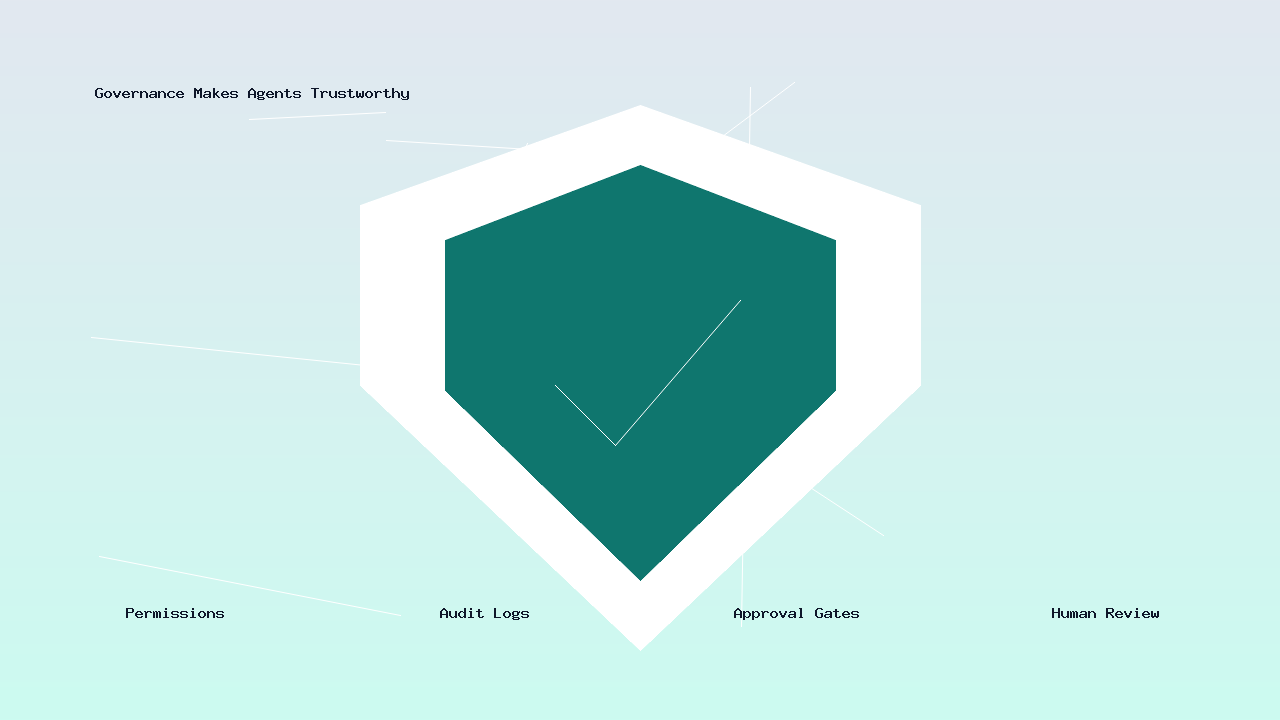
Governance must therefore be designed into the system from the beginning. Every AI agent cluster should have role-based access, clear approval gates, logging, version control for prompts, and measurable success criteria. Sensitive actions such as publishing content, changing prices, sending legal language, modifying production code, or accessing personal data should require human confirmation unless the process is extremely mature.
Human oversight is not a weakness in agentic AI. It is the control layer that makes automation trustworthy. People should define the goals, review exceptions, improve instructions, and decide where judgment matters most. Before any company scales autonomous AI agents, it should test prompts, review outputs, document decisions, and monitor failures. The highest-performing organizations will build operating models where humans and agents collaborate with clear responsibility.
How to Prepare for an Agentic AI Future
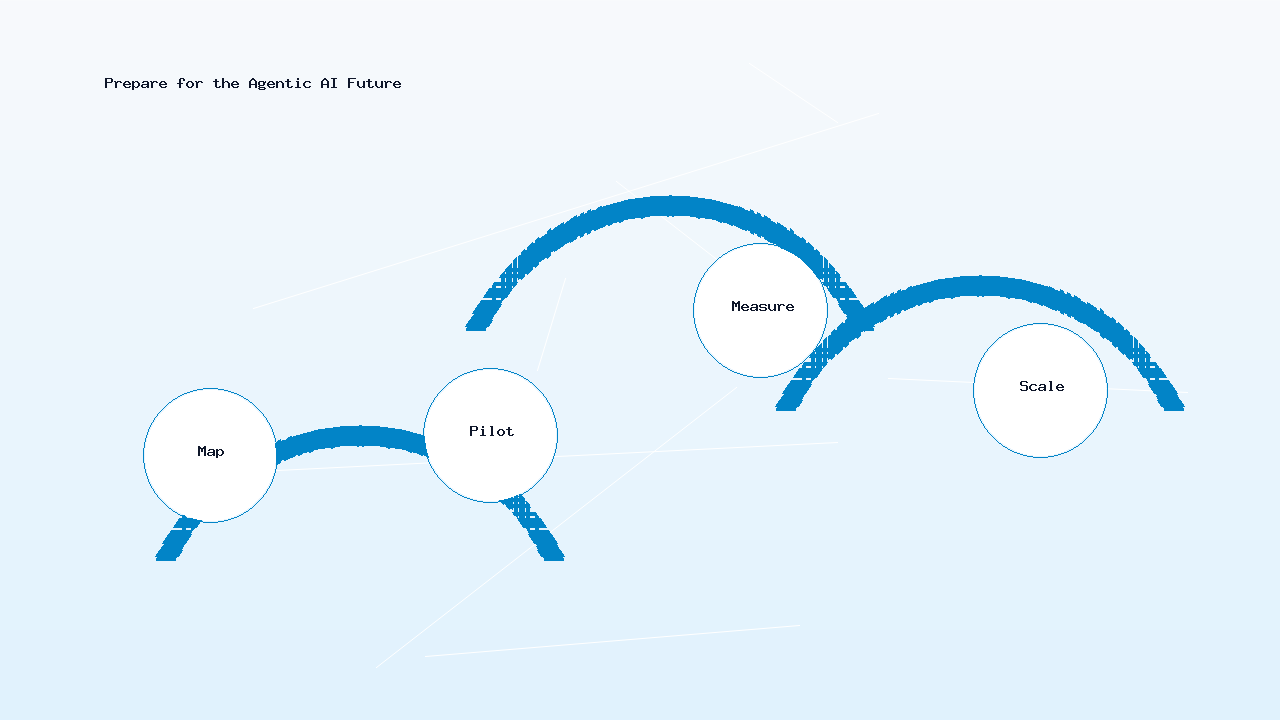
Organizations that want to benefit from artificial intelligence agents should begin with process mapping. Identify workflows with clear inputs, repeated decisions, and measurable outcomes. Then decide which parts can be automated, which parts need human review, and which systems the agents must access.
Next, create a small pilot. A good pilot might automate research brief creation, customer ticket triage, SEO content planning, or internal report generation. Keep the scope narrow, measure quality, and compare results against the current process. Track time saved, error rates, user satisfaction, and escalation frequency. These metrics will show whether the agent cluster is improving work or merely adding complexity.
Finally, invest in skills and governance. Teams need to understand prompt design, workflow orchestration, data privacy, AI security, and evaluation. Leaders need policies for acceptable use, procurement, monitoring, and accountability. The future of enterprise AI automation will belong to organizations that treat artificial intelligence agents as systems to design, manage, and improve, not as one-off tools.
FAQs About Artificial Intelligence Agents
What is an artificial intelligence agent?
An artificial intelligence agent is an AI-powered software system that can understand a goal, plan steps, use tools, and take action. Unlike a basic chatbot, it can work through a process and adapt based on the results it receives.
What is an AI agent cluster?
An AI agent cluster is a group of specialized artificial intelligence agents working together on a shared workflow. Each agent has a role, such as researcher, planner, executor, reviewer, or monitor, which helps complex tasks move through a structured process.
Are autonomous AI agents safe for business use?
They can be safe when they are designed with permissions, audit logs, approval gates, and clear limits. High-risk tasks should keep humans in the loop, especially when the workflow affects customers, money, legal obligations, personal data, or public publishing.
How do artificial intelligence agents improve SEO workflows?
AI agents can support SEO by researching keywords, grouping topics into clusters, drafting outlines, checking readability, suggesting internal links, creating meta descriptions, and monitoring performance. Human editors should still review strategy, accuracy, and brand voice.
Will AI agent clusters replace human teams?
AI agent clusters are more likely to change team workflows than replace teams completely. They can handle repetitive and information-heavy steps, while people focus on judgment, creativity, relationship management, strategy, and accountability.